Welcome to Umurage International Book and Art Festival
Umurage International Books and Art Festival
15 Lessons I Learned from Curating the Umurage International Book & Art Festival 2026
May 10, 2026
When I began curating the Umurage International Book & Art Festival 2026, I knew that bringing people together around books and the arts would require planning, partnerships, and considerable determination. What I did not fully appreciate was how much the experience would teach me about leadership, entrepreneurship, collaboration, and the difficult work of building a creative economy.
A festival programme may look straightforward on paper. You select a theme, invite speakers, develop sessions, find partners, coordinate logistics, and bring people through the doors. But behind every programme is a series of decisions about what matters, whose voices deserve attention, which conversations need to happen, and what you hope will remain when the event is over.
For me, Umurage was never intended to be just another cultural gathering. It was an opportunity to bring together different parts of the book ecosystem: authors, publishers, booksellers, artists, educators, young readers, policymakers, technology innovators, and cultural partners.
It was also an opportunity to ask a bigger question: how can we move from celebrating books and creativity to building an industry that creates jobs, generates income, develops talent, and contributes to Africa's future?
These are 15 lessons I learned along the way.
1. A festival is not an event; it is an ecosystem
One of the most important lessons I took from Umurage is that a festival should not be measured only by attendance, the number of speakers, or the photographs circulating on social media. Those things matter, but they are not the whole story. What happens when an author meets a publisher? When a bookseller discovers a new supplier? When a policymaker hears directly from a creative entrepreneur? When a young reader meets someone who has built a career around telling stories? These encounters can create opportunities that extend well beyond the festival. The real task of curation is to create the conditions for those connections to happen. A festival becomes more valuable when it helps an ecosystem function better.
2. A good theme should challenge people to think differently
The theme for Umurage 2026 was *The Future Is Written: Human Voices, Intelligent Tools, it reflected a question that the book industry can no longer afford to postpone: what happens to storytelling, publishing, reading, and creative work as artificial intelligence becomes more influential? We needed to consider both the opportunities and the risks. Technology can help publishers reach new audiences, make books more accessible, and experiment with formats such as audiobooks. At the same time, questions about intellectual property, authorship, consent, and the use of human voices require serious attention. A theme should do more than look good on a banner. It should give people a reason to participate, disagree, learn, and leave with new questions.
3. The creative economy needs business conversations, not just applause
Africa has talented writers, illustrators, musicians, designers, filmmakers, and other creatives. Yet talent alone does not guarantee a sustainable livelihood. Who pays for the work? How does it reach customers? Who owns the intellectual property? How do creators access finance, distribution, professional training, and new markets? These are not secondary questions. They are central to the future of the creative economy. At Umurage, the conversations about books and creativity needed to connect cultural value with commercial opportunity. Celebrating an author is important, but so is creating conditions in which that author can earn an income, publish another book, employ an editor, commission an illustrator, and build a sustainable enterprise. If we want the creative economy to contribute meaningfully to employment, we must take its business models seriously.
4. Women need more than visibility; they need economic opportunity
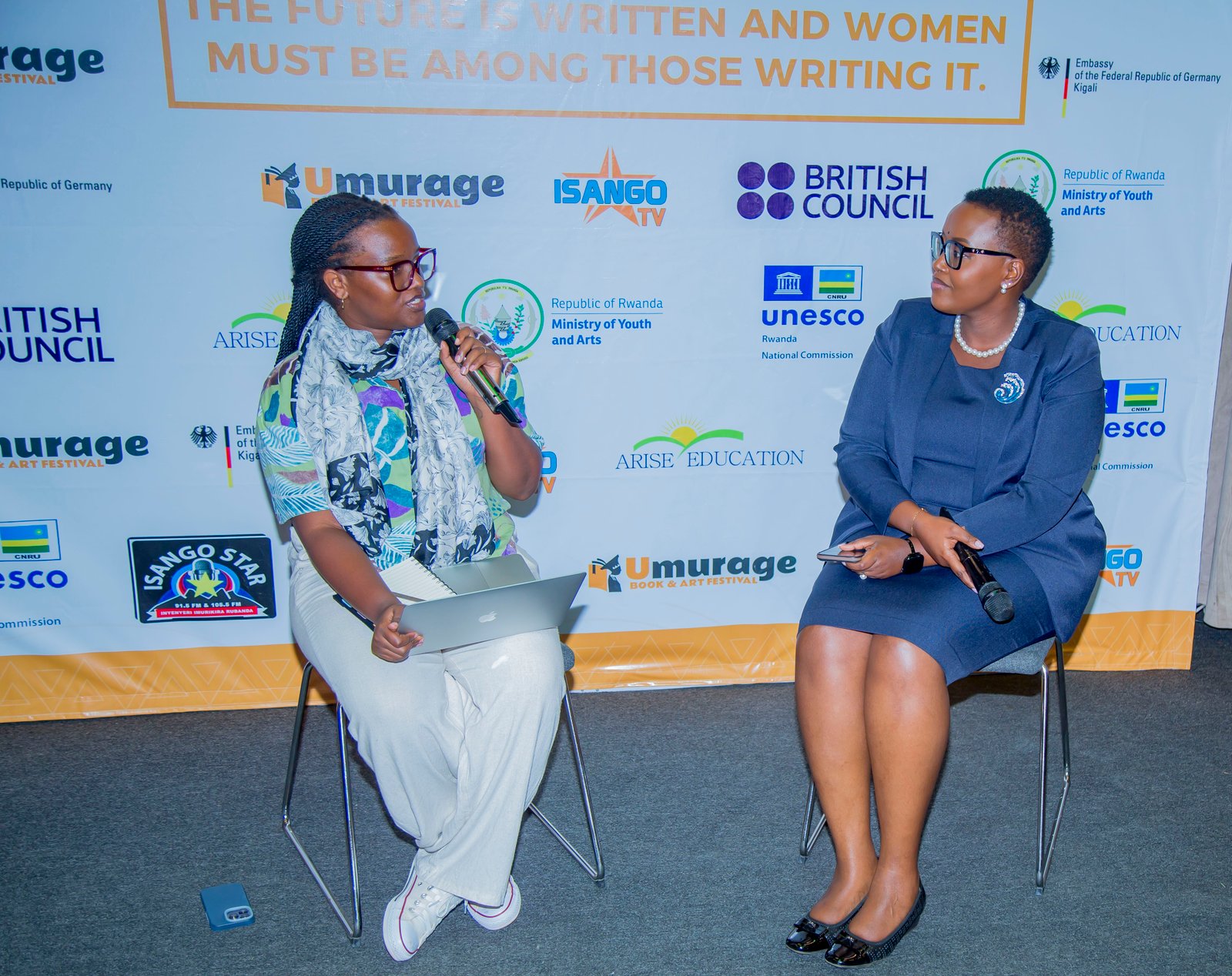
The Women Book Creatives Roundtable was an important part of the festival because it created space to discuss the realities facing women working across the book industry. Women write, publish, illustrate, sell books, organize literary activities, and sustain reading communities. Yet recognition does not automatically translate into access to capital, professional networks, distribution, or paying customers. We must move beyond asking how many women are represented on a stage. We must also ask how many can finance their next project, grow their businesses, own valuable intellectual property, and participate in decisions that shape the industry. Supporting women creatives requires more than celebrating their achievements once a year. It requires sustained investment, stronger professional networks, market access, and institutions that recognize their economic contribution.
5. Partnerships work best when everyone has a reason to participate
Bringing institutions and individuals together requires more than sending invitations. Government agencies may be interested in education, employment, or national development. Embassies and cultural institutions may prioritize cultural exchange. Businesses may be looking for customers, visibility, or new markets. Independent creatives may need professional opportunities and income. These interests are different, but they can intersect. The curator's responsibility is to identify that intersection and build a programme around shared objectives. A meaningful partnership should create value for everyone involved while contributing to a wider purpose. Umurage reminded me that partnership-building is not simply about securing support for an event. It is about helping different actors see why they belong in the same conversation.
6. No one builds an ecosystem alone
It is easy to associate a festival with its organizing institution. But no festival can succeed through the effort of one organization alone. It takes people willing to contribute ideas, expertise, time, networks, resources, and trust. It also takes partners who understand that building a cultural ecosystem is a collective undertaking. For independent organizations, collaboration is particularly important. The ambitions may be large, but the available resources are not always sufficient. The lesson is not to make the vision smaller. It is to build a stronger network of people and institutions who can contribute different pieces of the solution.
7. The book industry must embrace technology without losing its human voice
The publishing industry is changing. Audiobooks, digital libraries, artificial intelligence, and new distribution platforms are creating possibilities that would have seemed distant only a few years ago. For African publishers, these developments present opportunities to reach readers beyond geographical boundaries, experiment with local-language content, and develop new ways to distribute books. But adopting technology should not mean accepting every new tool without asking questions. Who owns the content used to train AI systems? What happens when a person's voice is replicated without consent? How can independent publishers benefit from digital platforms without losing control over their work? Our task is to understand the tools, shape the conversation, and ensure that innovation serves authors, readers, and publishers rather than treating them as afterthoughts.
8. Innovation must reach beyond the obvious markets
When we discuss innovation in publishing, it is tempting to focus on the latest digital platforms, sophisticated technologies, or international markets. But innovation also means making books available in local languages, reaching readers outside major cities, developing affordable formats, and helping independent publishers access distribution channels. A solution that works for a large publishing house in an established market may not work for a small publisher producing children's books in Kinyarwanda. The African book industry needs solutions shaped by its own circumstances, readers, languages, and commercial realities. Innovation is not simply about doing something new. It is about solving a problem that matters.
9. Young people should be participants in the book economy, not just its audience
Young people are often discussed as future readers. I believe we should also see them as future authors, illustrators, publishers, designers, booksellers, digital creators, and entrepreneurs. Reading festivals and children's activities can introduce young people to books, but they can also reveal the many professions behind a published story. A book is not created by an author alone. It may involve an editor, illustrator, translator, designer, printer, marketer, distributor, and bookseller. Each role represents knowledge, skill, and potential employment. When we introduce young people to this wider world, we expand their understanding of what reading can make possible. The next generation should not only consume stories. It should have opportunities to create, publish, distribute, and earn from them.
10. Cultural diplomacy can open doors that business alone may not open
Books and the arts create a natural meeting point between countries and cultures. They allow people to share ideas, explore unfamiliar experiences, and discover common interests. Through cultural gatherings, institutions can develop relationships that go beyond formal representation. Authors can meet new audiences, publishers can explore translation opportunities, and cultural organizations can exchange expertise. But cultural diplomacy becomes even more valuable when the relationships lead to practical outcomes. Can a conversation lead to a translation partnership? Can an exchange introduce an African publisher to a new market? Can a cultural connection lead to training, investment, or a long-term professional relationship? These are the possibilities that make cultural engagement worth sustaining.
11. Curation is an act of leadership
A curator makes choices. Which voices should be heard? Which subjects have been neglected? Which people need to meet? What assumptions should be challenged? Which conversations could influence the future of an industry? These decisions shape the experience of a festival. Curation is therefore not simply a logistical exercise. It is an act of leadership that requires a clear understanding of the purpose behind the gathering. A well-curated programme does not need everyone to agree. It needs to create space for informed discussion, meaningful disagreement, and perspectives that might not otherwise encounter one another. The responsibility is to ensure that the programme serves a purpose larger than the event itself.
12. Every festival should leave something behind
When an event ends, the photographs are published, the guests return home, and the programme becomes a record of what happened. But what has changed? Perhaps a publisher has found a new collaborator. Perhaps a young person has discovered a career possibility. Perhaps an institution has recognized a gap in the sector. Perhaps a conversation has generated a project worth developing. These outcomes are not always immediate or easy to measure, but they matter. A festival should create opportunities for follow-up, document the lessons that emerge, and give promising ideas a chance to develop. If every edition starts from zero, we risk spending our energy recreating the same momentum. If each edition builds on the last, a festival can become an instrument for long-term development.
13. The invisible work deserves recognition
People see the programme, the speakers, the stage, and the audience. They do not always see the countless conversations and decisions that made those things possible. There is the coordination, the follow-up, the revisions, the scheduling, the partner communication, and the inevitable adjustments when circumstances change. This invisible work is not glamorous, but it is essential. Curating Umurage reminded me that leadership involves holding the bigger vision while remaining attentive to the smallest details. Both matter. A brilliant idea cannot compensate for a programme that does not work, just as flawless logistics cannot rescue an event without a meaningful purpose. Good execution and a compelling vision must go together.
14. Passion needs a sustainable operating model
Passion is often what gets cultural initiatives started. It gives people the courage to attempt something that may not yet have an established market or reliable source of funding. But passion alone cannot sustain an institution indefinitely, festivals require realistic budgets, clear responsibilities, financial planning, diversified partnerships, and a strategy for continuity. They also require an honest understanding of what the organizing team can deliver with the resources available. This is particularly important for independent cultural organizations that are trying to build sectors that are still developing.
We cannot keep asking individuals to compensate for structural weaknesses through personal sacrifice. If we believe books and the arts contribute to education, employment, innovation, and national development, we must develop models that allow the institutions serving these sectors to survive and grow.
15. Building a creative industry requires patience
Perhaps the most important lesson is that a festival cannot build an industry in four days. An ecosystem develops over time. It needs readers, viable businesses, skilled professionals, supportive institutions, reliable distribution systems, access to finance, and policies that recognize the value of creative work. It needs people willing to keep doing the work even when the results are not immediately visible. For those of us working in the book sector, the challenge is not simply to organize more events. It is to make the industry stronger with each initiative we undertake. That means connecting reading promotion with publishing, publishing with distribution, creativity with enterprise, and cultural participation with economic opportunity. It also means recognizing that the book industry is not separate from the wider development agenda. It contributes to literacy, education, employment, cultural identity, innovation, and the production of knowledge. That is a much bigger ambition than filling a festival programme. It is also a much more worthwhile one.
Beyond the festival
Curating Umurage International Book & Art Festival 2026 reinforced something I have believed throughout my work in Rwanda's book sector: we must move beyond celebrating books to building the systems that allow books and creativity to flourish.
I want to see more African stories published and distributed. I want local-language publishing to become a stronger part of our knowledge economy. I want young people to recognize the opportunities within the creative industries. I want women who create books and other cultural products to have access to the resources and markets they need to grow. And I want institutions to see the book industry not merely as a cultural activity, but as part of our economic and social infrastructure.
Umurage was one contribution to that larger ambition. The festival may occupy a few days on the calendar, but the work continues long after the final session. The question I am carrying forward is this: how do we turn the energy created by cultural gatherings into lasting opportunities for readers, creators, entrepreneurs, and the wider African economy?
That is the work ahead and it is work worth building together.